


A harness that arrests a fall has done its job — but the danger doesn’t necessarily end there. If a worker is left hanging motionless in a harness after a fall, waiting for rescue, a real and well-documented risk called suspension trauma can set in, and it’s one most harness buyers have never heard of.
In short: suspension trauma (also called orthostatic intolerance or harness hang syndrome) happens when someone hangs motionless and upright in a harness, and the leg straps restrict blood flow back to the heart. It’s a recognised risk in fall-arrest safety internationally, which is why a rescue plan — not just a harness — is considered part of a proper fall protection setup, and why we stock suspension trauma relief straps as a specific accessory.
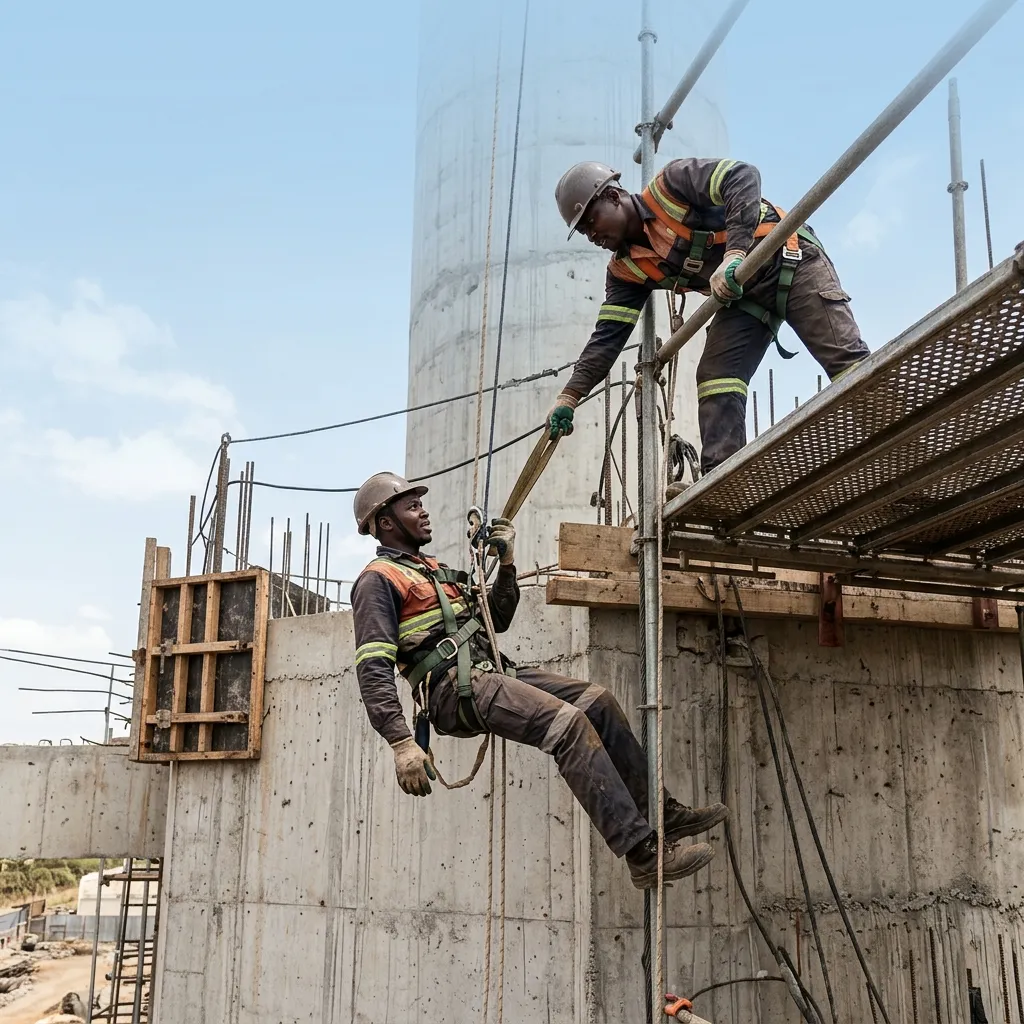
Why hanging still, not the fall itself, is the risk
Once a fall is arrested, a worker suspended upright and motionless in a harness has their leg straps pressing on the backs of the thighs. Blood pools in the legs instead of returning to the heart, and without movement to help circulate it, this can become dangerous the longer the person remains suspended and still. It’s a physiological response, not a defect in the harness — any full body harness can create the conditions for it if someone hangs in it too long without moving.
Why this is a rescue-plan problem, not just an equipment problem
Because the risk builds the longer someone is suspended, how quickly a fallen worker can be reached matters as much as the harness that caught them. This is the practical reason a rope access or rescue kit — like the ones in our height safety kits guide — includes descenders and rescue-specific components: it’s not just about doing the job, it’s about being able to reach and lower a suspended colleague quickly.
Suspension trauma straps: relieving pressure while waiting for rescue
Our Suspension Trauma Straps (711-STS01) attach to the harness with a textile loop and Velcro, and let the suspended worker stand up in the harness to relieve pressure on the leg straps and restore some circulation while waiting to be lowered or rescued. They’re compact, lightweight, and don’t interfere with normal harness use — a low-cost addition against a genuine physiological risk.
The rescue-plan components that matter alongside a harness
A cow’s tail (711-CT401) is used to anchor a fall victim to a rescuer during a rescue, and features in our Rescue Kit alongside a grip descender for controlled lowering. None of this replaces having an actual written rescue plan for anyone working at height — the equipment supports the plan, it isn’t a substitute for having one.
Frequently asked questions
What is suspension trauma?
Suspension trauma (also called orthostatic intolerance or harness hang syndrome) occurs when someone hangs motionless and upright in a harness after a fall, and the leg straps restrict blood flow back to the heart from the legs.
Does this mean full body harnesses are unsafe?
No — the harness did its job by arresting the fall. Suspension trauma is about what happens afterwards if the person remains motionless and suspended for an extended period without being reached.
What do suspension trauma straps actually do?
They attach to the harness and let a suspended worker stand up periodically, relieving pressure on the leg straps and helping restore circulation while waiting for rescue.
Is a suspension trauma strap a substitute for a rescue plan?
No — it buys time and relieves pressure, but a written rescue plan and the means to reach a suspended worker quickly (such as a descender in a rescue kit) are what actually resolve the situation.
This completes our Safety Harnesses & Fall Protection series. See our guides to harness types, fall arrest vs restraint lanyards, rope access equipment, ready-made height safety kits and what Kenyan law requires.
Browse our full fall protection range in stock now, or get in touch to talk through your team’s rescue plan.






Recent Comments