


Buying the right fire safety equipment is only half the job. Kenyan law sets an ongoing inspection requirement too, and it’s easy to satisfy it on the day equipment is installed and then quietly let it lapse.
In short: Rule 30(2)(a) of the Factories and Other Places of Work (Fire Risk Reduction) Rules, 2007 requires inspection and testing of all firefighting appliances in the workplace by a competent person at least once every twelve months. A separate provision, Rule 30(2)(c), requires extinguisher cylinders specifically to be examined and hydraulically pressure-tested at least once every five years.
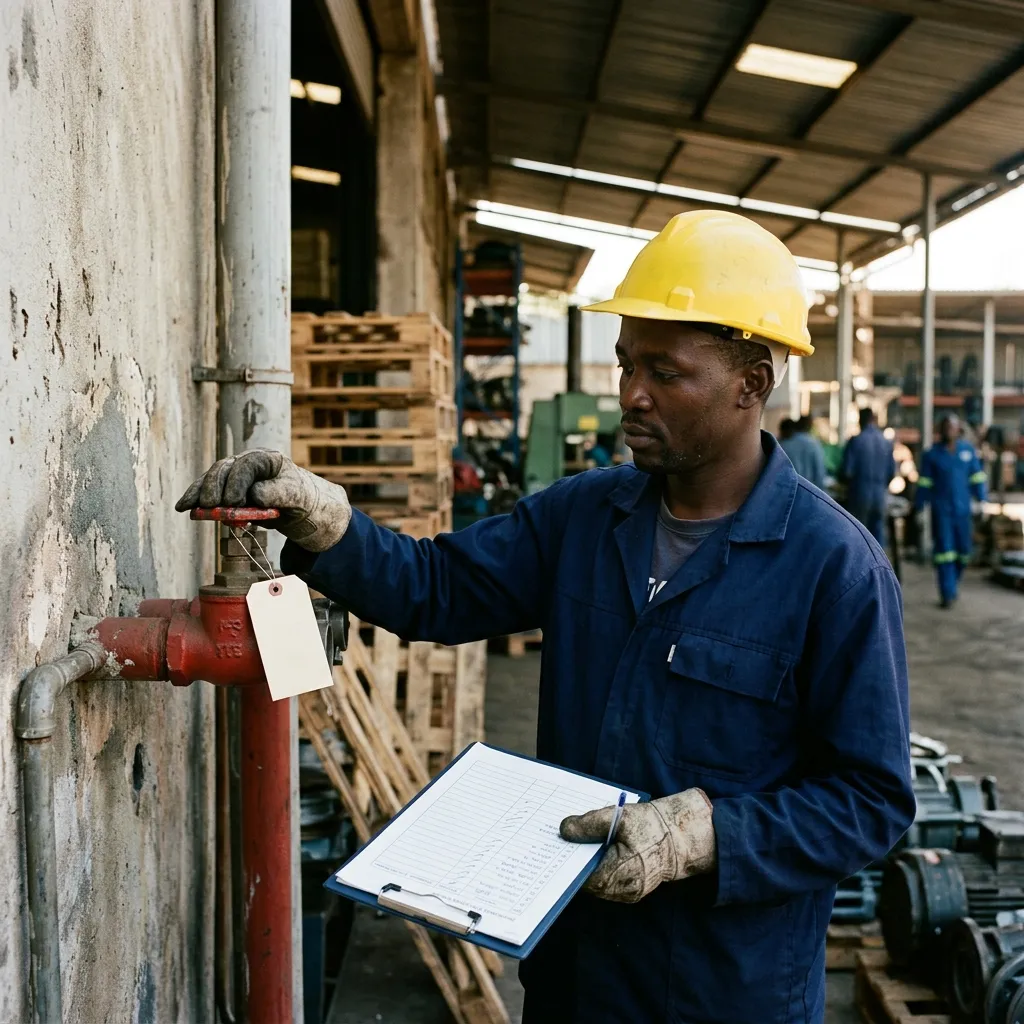
Two different clocks, not one
It’s worth separating these two requirements clearly, because they run on different schedules and cover different things. The twelve-month inspection (Rule 30(2)(a)) is a general check that firefighting appliances — hose reels, hydrant hose and nozzles, extinguishers, whatever the workplace has — are present, accessible and functional. The five-year hydraulic test (Rule 30(2)(c)) is a specific, more technical test that applies to extinguisher cylinders, checking the cylinder itself can safely hold pressure. A workplace can be current on one and overdue on the other without realising it.
Why “by a competent person” is a real requirement, not filler
Rule 30(2)(a) specifies inspection has to be carried out by a competent person — someone with the training or expertise to actually assess whether the equipment works, not just confirm it’s physically present. A visual walk-past that confirms a hose reel is still on the wall isn’t the same thing as an inspection that confirms it would actually function if used.
What gets missed most often
The most common gap isn’t equipment that’s obviously broken — it’s equipment nobody has scheduled a check for at all. A hydrant hose and nozzle that’s never been used since installation is easy to assume is fine; the inspection exists precisely because assuming isn’t the same as checking. Similarly, extinguisher cylinders often get refilled or serviced informally without the five-year hydraulic test being tracked as its own separate requirement.
Building a simple inspection record
Since Rule 30(2)(a) sets a minimum frequency rather than a specific method, a simple annual log — what was checked, by whom, and the date — is enough to demonstrate compliance and is exactly the kind of record a fire safety audit (Rule 36) will ask to see. Tracking the twelve-month and five-year clocks separately, rather than lumping “fire equipment maintenance” into one vague task, avoids the more technical five-year test getting missed.
Frequently asked questions
How often must firefighting equipment be inspected in Kenya?
At least once every twelve months, by a competent person, under Rule 30(2)(a) of the Fire Risk Reduction Rules, 2007.
Is the fire extinguisher testing requirement different from other firefighting equipment?
Yes — extinguisher cylinders specifically also require a hydraulic pressure test at least once every five years, under Rule 30(2)(c), in addition to the general twelve-month inspection.
Who counts as a “competent person” for a fire equipment inspection?
The regulation requires the inspection to be carried out by someone with the training or expertise to properly assess the equipment — not simply confirm it’s present.
What happens if firefighting equipment inspection records don’t exist?
Missing records are exactly the kind of gap a fire safety audit (Rule 36) is designed to catch, since the audit checks a workplace’s compliance with the regulation as a whole.
See our guides to fire hose reel coverage and the annual fire safety audit. Also see our guides to fire hydrant landing valves, matching hose and nozzle to your hydrant system and fire assembly points and emergency exits.
Browse our Fire Division range if an inspection has flagged equipment that needs replacing, or get in touch for a quote.










Recent Comments