

Kenyan law puts the duty on the occupier, not a signage standard: under the Occupational Safety and Health Act 2007, every occupier “shall ensure the safety, health and welfare at work of all persons working in his workplace” (Section 6). A wet-floor sign, a prohibition notice or a made-to-order danger sign is how that duty gets discharged at the exact spot where a hazard exists — not decoration, and not optional once a hazard has been identified.
Most Kenyan workplaces have at least one hazard that needs a sign, not a fence: a wet floor after cleaning, a restricted area, a “wear PPE beyond this point” boundary, a chemical store, a confined space entrance. The Act does not publish a numbered technical standard for sign colours, pictograms or sizes the way it does for machinery guarding — so what follows is grounded in Section 6’s general duty and in what SHL actually stocks, not an invented “KS” or “ISO” figure attached after the fact.
Portable warning signs for immediate, moving hazards
The Caution Wet Floor Sign “A-Frame” (SKU 1206-HBD110) is the stocked answer to the most common transient hazard in any Kenyan workplace: a floor that’s wet, being cleaned, or freshly mopped. It’s a portable A-frame that goes up in seconds in a pedestrian area or workspace while cleaning or liquid control is under way, and comes down again once the floor is dry — unlike a fixed sign, it moves with the hazard.
Section takeaway
- A wet floor is a moving hazard, so it needs a moving sign — a portable A-frame that goes up and comes down with the hazard itself, not a laminated notice stuck to a wall.
Danger, caution, prohibition and PPE signage — made to fit the actual hazard
For everything else — danger, caution, prohibition and “wear PPE” notices — SHL’s Signs As Required line (SKU 1902-600) covers standard stock signs and made-to-order signs “to suit client requirements,” in various materials and sizes. That matters in practice: a chemical store needs a different sign than a confined-space entrance or a forklift-only aisle, and a one-size sign bought off a shelf often doesn’t match the actual wording or pictogram the hazard calls for.
Because this line is made to order rather than a fixed catalogue of pre-printed signs, the honest answer to “which sign do I need” is a short conversation about the actual hazard, not a size chart — SHL can confirm exact wording, material and size once the hazard and its location are described.
Where a sign is the right tool, and where it isn’t
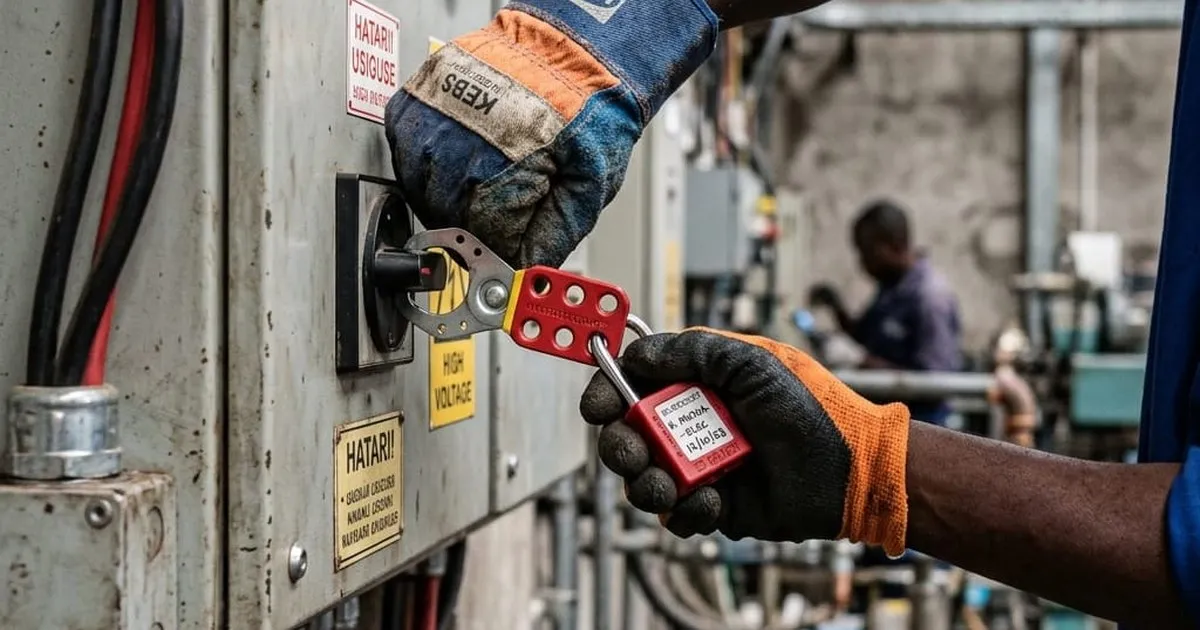
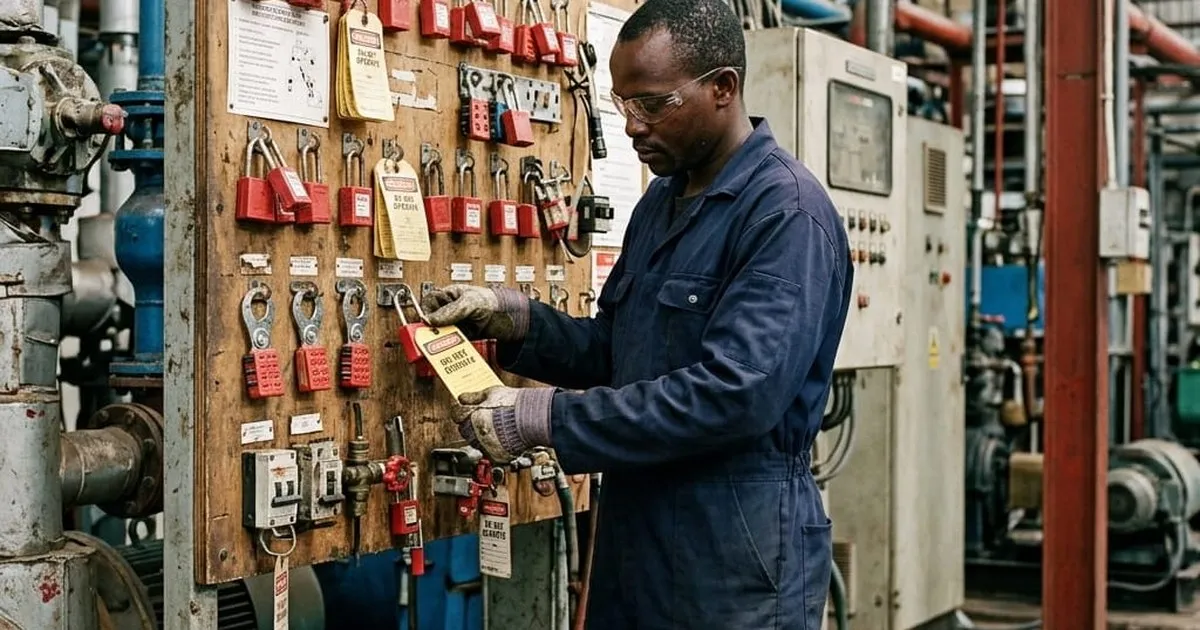
A sign identifies a hazard and instructs a response. It does not remove the hazard. Section 6’s duty of care is discharged in layers — physical guarding under Sections 56–58 for machinery (see our lockout-tagout range for isolating machinery before it’s worked on), barriers and cordoning for restricted areas (see our crowd control barriers and fencing guide), and signage for warning and instruction. Treating a sign as a substitute for a guard or a barrier, rather than one layer among several, is the most common gap we see on Kenyan sites.
Common questions
Does Kenyan law specify sign colours or sizes?
The Occupational Safety and Health Act 2007 does not publish a numbered technical standard for sign colours, pictograms or dimensions. It sets the general duty (Section 6) that the occupier must ensure a safe workplace — signage is one of the ways that duty is met at a specific hazard, and SHL’s made-to-order signs are sized and worded to the hazard described.
Can SHL make a custom sign for a specific hazard on my site?
Yes — the Signs As Required line (SKU 1902-600) is available from stock for common notices and made to order for anything client-specific, in various materials and sizes.
What’s the difference between a wet floor sign and a permanent hazard sign?
A wet floor sign (the A-frame, SKU 1206-HBD110) is portable and meant to move with a temporary hazard — up while the floor is wet, down once it’s dry. A permanent danger, caution or prohibition sign stays fixed at a hazard that doesn’t go away, like a chemical store or a machinery area.

Dipak Soni is the Managing Director and Founder of Specialised Hardwares Limited, a Nairobi-based supplier of PPE, safety equipment and industrial hardware serving construction, manufacturing and industrial businesses across Kenya.








Recent Comments