

“Safety harness” isn’t one product. SHL stocks four different full body harness configurations, and the number that matters most isn’t price or brand — it’s how many attachment points (D-rings) the harness has, because that decides what work it’s actually rated for.
In short: a 1-point harness has one dorsal D-ring for fall arrest only (EN 361). A 3-point harness adds two lateral D-rings for work positioning (EN 361 + EN 358). A 5-point harness adds a ventral D-ring for rope access and rescue work (EN 361 + EN 358 + EN 813). More points isn’t “better” in the abstract — it’s a different job.
1-Point: fall arrest only
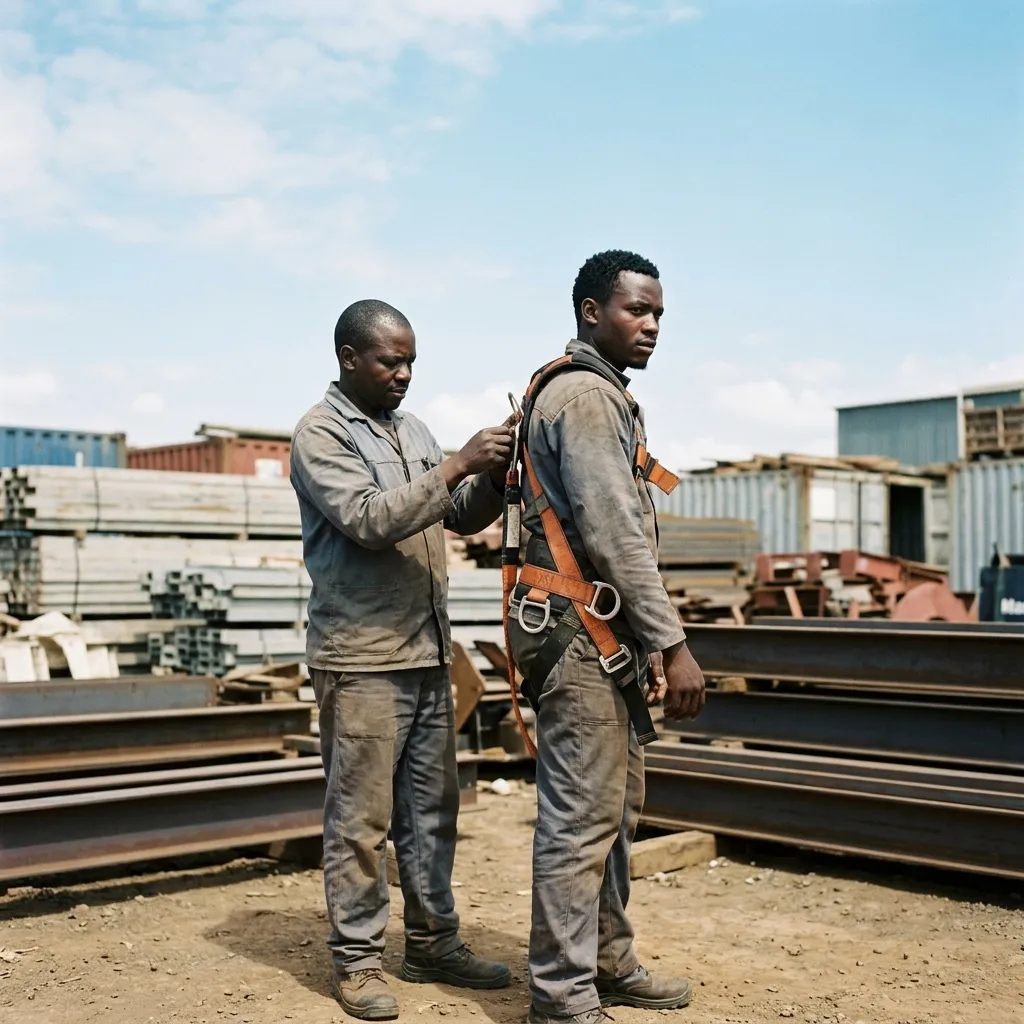
Our Full Body Harness 1AP (SKU 704-FBH21) has a single dorsal (back) D-ring and conforms to EN 361. That’s the standard for fall arrest: if a worker falls, the harness distributes the arresting force safely across the body. This is the entry-level configuration — it does one job, and it does it properly, but it has no D-ring for work positioning or rope access.
3-Point: fall arrest plus work positioning
The Full Body Harness with WP Belt 3AP (704-FBH44) adds two lateral D-rings at waist level, bringing it up to EN 361 and EN 358. The lateral D-rings are for work positioning — connecting a positioning lanyard so a worker can lean back and work hands-free at height, on a pole or structure, rather than just being caught if they fall.
5-Point: fall arrest, work positioning and rope access
The Full Body Tower Harness 5AP (704-FBH56) and Full Body Superio Harness 5AP (704-S3) both add a ventral (front, waist-level) D-ring, conforming to EN 361, EN 358 and EN 813. The ventral D-ring is what rope access and rescue work actually connects to — it’s the standard configuration for tower climbers, rope technicians and rescue teams. The Superio adds aluminium D-rings, quick-connect buckles and cushioned padding for extended wear.
Why “more points” isn’t automatically the right choice
A 5-point harness costs more and has more hardware to inspect and maintain than a 1-point harness. If the job is straightforward fall arrest — working near an edge with a fixed anchor, no positioning or rope access involved — a 1-point harness does the job without the extra weight and points to check. The right harness is the one that matches the actual task, not the one with the most D-rings.
Frequently asked questions
What’s the difference between a 1-point and 3-point safety harness?
A 1-point harness has a single dorsal D-ring for fall arrest only (EN 361). A 3-point harness adds two lateral D-rings for work positioning (EN 358), letting a worker lean back and work hands-free at height.
What is a 5-point harness used for?
A 5-point harness adds a ventral D-ring (EN 813) to the fall-arrest and work-positioning D-rings, making it suitable for rope access and rescue work — the standard configuration for tower climbers and rope technicians.
Does a higher point count mean a safer harness?
No — it means more capability for different tasks, not a higher safety grade. All configurations meet EN 361 for fall arrest; the extra D-rings add work positioning and rope access capability for tasks that need them.
Can one harness be used for fall arrest, work positioning and rope access?
Yes — a 5-point harness (EN 361, EN 358 and EN 813) covers all three, which is why it’s the standard choice for tower and rope access work rather than switching harnesses between tasks.
Once you’ve matched the harness to the task, see our guides to fall arrest vs restraint lanyards and ready-made height safety kits.
Browse our full harness range in stock now, or get in touch to talk through which configuration fits your work.

Hiren Gohel is a Director at Specialised Hardwares Limited, a Nairobi-based supplier of PPE, safety equipment and industrial hardware serving businesses across Kenya. His sales knowledge covers personal protective equipment, safety products, workwear and uniforms, fire protection, emergency rescue gear, industrial supplies and tools.













Recent Comments